 MindfulMenu
Science of Hunger Awareness
Published: January 2026 | Category: Nutrition Science
How Does Hunger Work?
Hunger is not a simple signal but a complex biological process involving multiple systems working together. Understanding these mechanisms helps clarify how the body communicates nutritional needs.
Key Hormones in Appetite Regulation
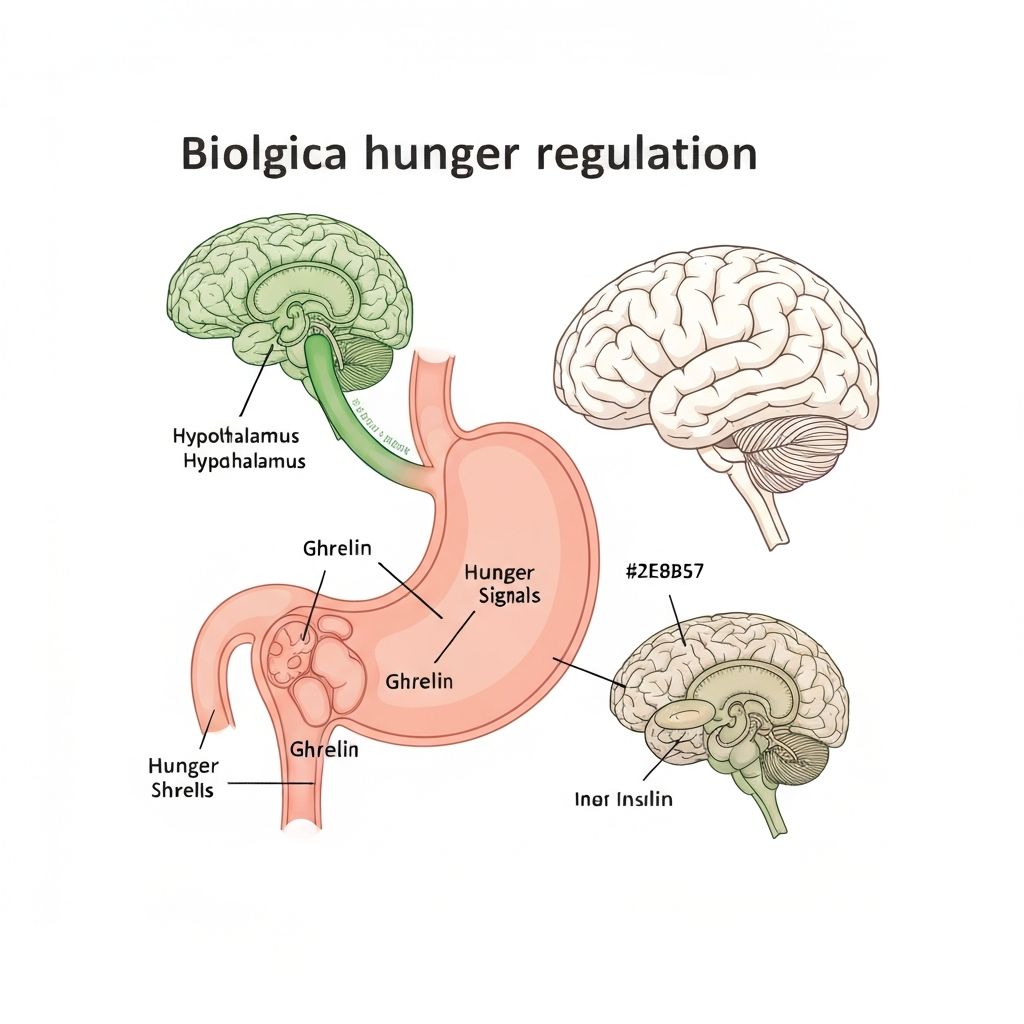
The body uses hormones to regulate appetite. Ghrelin, often called the "hunger hormone," is produced in the stomach and signals to the brain that food is needed. Leptin, produced by adipose tissue, signals fullness and energy stores to the brain.
These hormones don't work in isolation. The brain—particularly the hypothalamus—processes these signals along with information about energy expenditure, physical activity, sleep, stress, and emotional state. The result is a complex appetite regulation system rather than a simple on-off switch.
The Role of the Hypothalamus
The hypothalamus is a small brain region that acts as the body's nutritional control centre. It integrates hormone signals, temperature information, blood glucose levels, and sensory input from eating. This integration determines hunger and satiety signals.
Importantly, the hypothalamus is also connected to emotional and reward centres of the brain. This is why stress, emotion, and habit can influence hunger signals independently of actual nutritional needs.
Satiety Signals and Fullness
Satiety is the sense of fullness or satisfaction after eating. Unlike hunger, which has hormonal components, satiety involves multiple cues:
- Gastric Stretch: The stomach physically stretches as it fills, sending signals to the brain
- Hormone Release: Eating triggers release of hormones like peptide YY and cholecystokinin (CCK) that signal fullness
- Nutrient Absorption: The small intestine detects nutrients being absorbed and sends fullness signals
- Blood Glucose Levels: Rising blood glucose after eating is detected by the brain
- Sensory Adaptation: The brain adapts to taste, smell, and texture, reducing the reward value of continued eating
Attention and Hunger Signal Perception
Hunger and satiety signals are always present, but conscious attention to these signals varies. When someone is focused on eating—noticing flavours, textures, and physical sensations—they may be more aware of satiety cues.
Conversely, when attention is directed elsewhere (screens, work, conversation), hunger and fullness signals may not register as prominently in conscious awareness. This doesn't change the biological signals themselves, but affects whether they influence eating behaviour.
Distraction and Consumption
Research shows associations between distraction during eating and increased consumption. When attention is divided, individuals may continue eating past the point where they would normally feel satisfied. This suggests that attention influences the translation of biological signals into behavioural responses.
Individual Variation
Importantly, these mechanisms vary significantly between individuals. Genetics influence hormone sensitivity and appetite regulation patterns. Health conditions, medications, sleep quality, stress levels, and lifestyle all affect how hunger and satiety signals function.
No universal formula exists for how these systems work in all people. Some individuals experience strong satiety signals; others have more subtle ones. Some are highly sensitive to emotional influences on appetite; others less so. These variations are normal and influenced by multiple biological and environmental factors.
Key Takeaway
Hunger and satiety are biological processes regulated by complex interactions between hormones, the nervous system, and the brain. Attention can influence awareness of these signals, but does not change the underlying biology. Individual responses vary widely based on genetics, health, environment, and many other factors.
Note: This article is educational and explains scientific concepts. It is not medical advice and does not replace consultation with healthcare professionals for personal health questions.